
Applicant Tracking System (ATS): How to Choose the Right One in 2026
Most applicant tracking system comparisons are written by, or paid for by, the vendors they compare, which is why so many "best ATS" lists happen to rank the sponsor near the top. This guide skips the rankings entirely and gives you the evaluation framework instead: what actually determines whether an ATS fits your hiring volume, team structure, and budget, and the specific questions to ask any vendor before signing a contract.
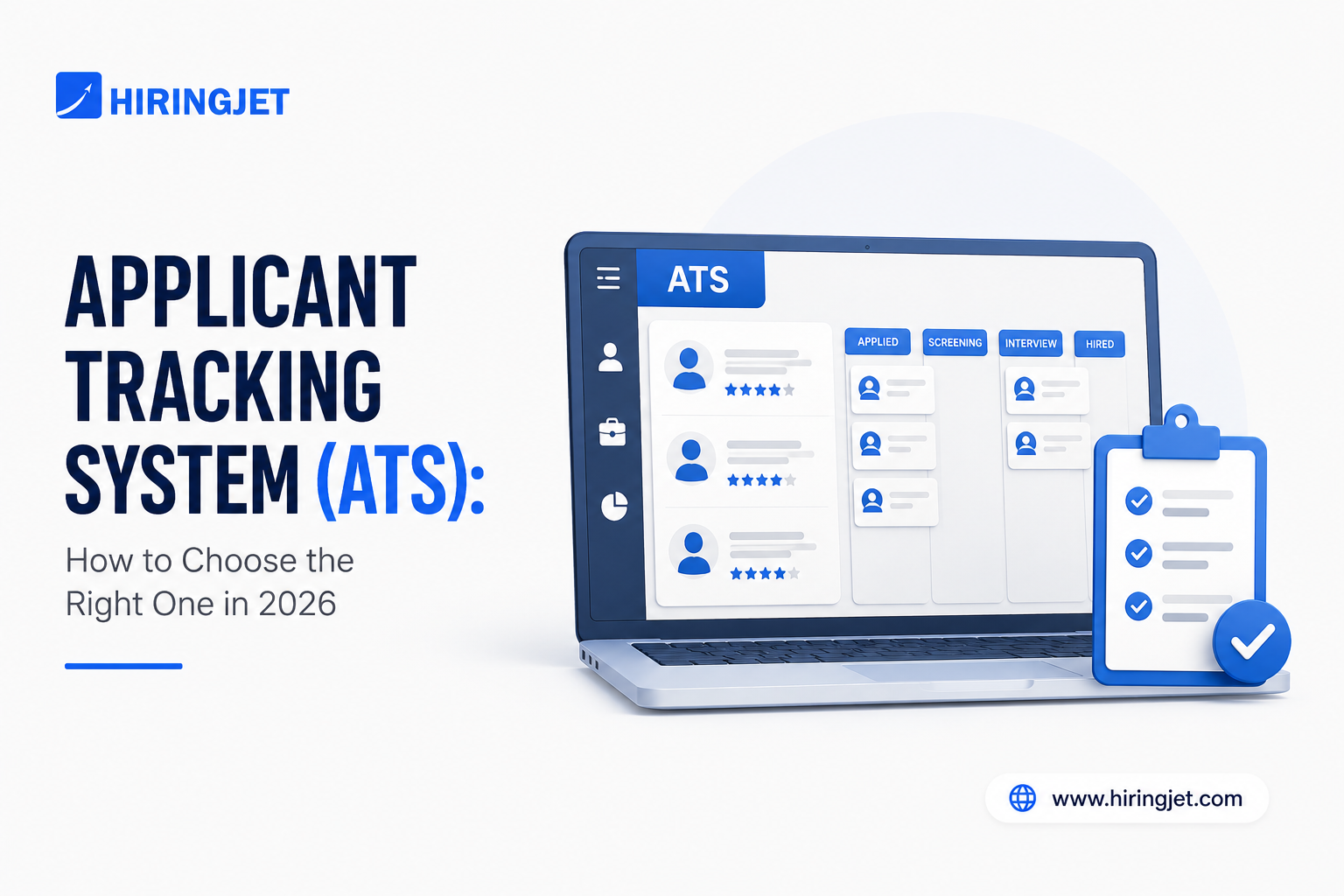
An applicant tracking system is recruitment software that manages job postings, resume parsing, candidate pipelines, and hiring workflow in one place. In 2026, roughly 79% of organizations have integrated AI or automation into their ATS, and the platform has evolved from an administrative tool into what many TA leaders now describe as the operating system for the entire hiring function. Choosing the wrong one is expensive in ways that don't show up until months later: lost candidates, disconnected data, and a hiring team quietly working around the software instead of through it.
Quick Answer: Choosing an ATS in 2026 depends primarily on hiring volume, team structure, and integration needs, not feature count. Match platform complexity to actual scale: lightweight tools for low-volume hiring, mid-market platforms with CRM features for growth-stage teams, and enterprise systems with deep HRIS integration for high-volume, multi-region hiring.
What an ATS Actually Does
At its core, an ATS centralizes job posting distribution, resume parsing, candidate pipeline tracking, interview scheduling, and hiring workflow into a single system, replacing spreadsheets and scattered email threads. Most 2026 platforms layer additional functionality on top: AI-powered resume screening and candidate matching, generative AI tools for drafting job descriptions and outreach, reporting dashboards tracking cost-per-hire and time-to-fill, and increasingly, candidate relationship management features that blur the line between an ATS and a sourcing CRM.
The Question That Should Drive Your Decision: What's Your Actual Hiring Volume?
The single biggest mistake in ATS selection is buying a platform built for a different scale than your actual hiring needs, in either direction. An enterprise-grade system with dozens of configuration options overwhelms a five-person startup hiring quarterly, while a lightweight tool built for occasional hiring will buckle under the workflow complexity of a retailer onboarding hundreds of hourly workers per month.
- Low-volume, infrequent hiring (under 20 hires per year): prioritize simplicity, fast setup, and low cost over advanced automation, which often goes unused at this scale.
- Growth-stage, steady hiring (20-200 hires per year): prioritize sourcing and CRM functionality alongside core ATS features, since proactive pipeline-building becomes more valuable than reactive application management at this scale.
- High-volume or multi-region hiring (200+ hires per year): prioritize deep HRIS and payroll integration, advanced reporting, and configurable workflows that can handle multiple business units or countries without becoming unmanageable.
Evaluation Criteria That Actually Matter
1. Integration Depth With Your Existing HR Stack
An ATS that does not connect natively with your HRIS, payroll, and background check providers creates duplicate data entry and reconciliation work that erodes any time savings the platform itself provides. Ask specifically which integrations are native versus which require a third-party middleware tool or manual export, since the difference materially affects both setup time and ongoing data accuracy.
2. AI Quality, Not Just AI Presence
With the large majority of platforms now offering some form of AI or automation, the differentiator in 2026 is no longer whether a platform has AI, but whether that AI is explainable and auditable. Ask vendors specifically whether candidate scoring is explainable, meaning a recruiter can see why a candidate was ranked a certain way, or a black-box score with no visible reasoning. Also ask whether the platform includes bias auditing capability, which is increasingly relevant given expanding AI hiring regulation.
3. Candidate-Facing Experience
Evaluate the ATS from a candidate's perspective, not just a recruiter's. Test the actual mobile application flow yourself. A clunky, desktop-only application process actively costs qualified candidates in a market where mobile-first application experience is now considered a baseline expectation rather than a differentiator.
4. Total Cost of Ownership, Not Just the Sticker Price
Pricing transparency varies significantly across the market. Some platforms bundle core features like career sites and integrations into a single price; others sell them as paid add-ons that meaningfully inflate the effective cost. Request a full, itemized quote covering every feature you actually need before comparing headline pricing across vendors.
5. Reporting and Analytics Depth
At minimum, an ATS should natively track cost-per-hire, time-to-fill, pipeline conversion by stage, and source-of-hire without requiring a separate business intelligence tool. If leadership needs recruiting ROI data regularly, confirm the platform's reporting can be exported or connected directly into your existing dashboards rather than requiring manual compilation.
6. Compliance and DEI Tooling
With AI hiring regulation, salary transparency laws, and bias-audit requirements all expanding in 2026, confirm the platform supports resume anonymization where relevant, diversity metric tracking, and compliant salary range disclosure directly in job postings, rather than treating these as manual workarounds outside the system.
Questions to Ask Every ATS Vendor Before Signing
- Which integrations are native, and which require a third-party connector or manual export?
- Is candidate scoring explainable, and can our team audit it for bias?
- What is the full, itemized cost including every feature we need, not just the base package?
- What does onboarding and data migration from our current system actually involve, and how long does it typically take?
- Can we test the candidate-facing application flow on mobile before committing?
- What compliance and bias-audit features are included natively versus requiring a separate add-on or third-party tool?
- What does the contract's exit clause look like, and how easily can our data be exported if we switch platforms later?
Common Mistakes in ATS Selection
- Buying for the hiring volume you hope to have, not the volume you actually have. Enterprise-tier complexity for startup-scale hiring wastes budget and slows the team down with unnecessary configuration.
- Evaluating AI features by marketing language rather than explainability. A platform advertising "AI-powered matching" without transparent scoring logic creates both a poor hiring decision tool and a compliance risk.
- Ignoring the candidate-facing experience entirely. Recruiter-side features are visible in a sales demo; candidate-side friction often only becomes obvious after launch, once application drop-off data starts coming in.
- Underestimating data migration effort. Switching ATS platforms without a clear migration plan for historical candidate data creates gaps that hurt both compliance recordkeeping and pipeline continuity.
- Treating ATS and CRM as separate purchases by default. For growth-stage teams doing active sourcing, a platform with integrated CRM functionality is often more cost-effective than running two separate tools.
What This Means for Job Seekers
Understanding how modern ATS platforms work helps you apply more effectively. Since a large majority of platforms now use some form of AI resume matching, using specific, plain-language skill terms that mirror the actual job posting improves how accurately your application matches, more than dense formatting or design-heavy resume templates that can confuse automated parsing.
Expert Insights
Recruiting operations leaders increasingly describe the ATS decision as a three-to-five-year infrastructure commitment rather than a simple software purchase, given how deeply the platform integrates into hiring workflow, candidate data, and compliance recordkeeping. The strongest evaluation processes treat vendor demos as a starting point rather than a conclusion, insisting on a trial period with real job requisitions and real candidate data before final commitment, since sales demos are optimized to hide exactly the friction points that matter most in daily use.
Industry Trends to Watch
- ATS and CRM functionality continue to merge. The line between applicant tracking and candidate relationship management is dissolving, with more platforms offering both natively rather than as separate tools.
- Explainable AI becomes a purchasing requirement, not a preference. As bias-audit and AI disclosure regulations expand, black-box candidate scoring is becoming a genuine compliance liability rather than just a trust concern.
- Tool sprawl is prompting consolidation. With many recruiting teams now running multiple separate tools alongside their primary ATS, expect growing demand for platforms that reduce that fragmentation natively.
- Mobile-first candidate experience becomes non-negotiable. Platforms lagging on mobile application flow are increasingly treated as disqualifying in vendor evaluations, not just a nice-to-have feature.
Key Takeaways
- Match ATS complexity to actual hiring volume and team structure, not aspirational future scale.
- Evaluate AI features for explainability and bias-audit capability, not just presence of AI marketing language.
- Test the candidate-facing mobile application experience directly rather than relying solely on a recruiter-facing sales demo.
- Request full itemized pricing, since bundled versus add-on feature structures create significant total cost of ownership differences across vendors.
- Confirm native compliance and DEI tooling given expanding AI hiring and pay transparency regulation in 2026.
Conclusion
The right applicant tracking system is the one that matches your actual hiring volume, integrates cleanly with your existing HR stack, and gives your team explainable, auditable AI rather than a black box. Skip the vendor-sponsored "best ATS" rankings and run your own evaluation against the criteria that determine real day-to-day fit: integration depth, AI explainability, candidate experience, and total cost of ownership. A platform chosen this way will still be serving your hiring team well three years from now, long after the sales demo is forgotten.
Frequently Asked Questions
What is an applicant tracking system?
An ATS is recruitment software that manages job postings, resume parsing, candidate pipeline tracking, interview scheduling, and hiring workflow in a single centralized system.
How do I choose the right ATS for my company size?
Match platform complexity to your actual annual hiring volume: lightweight tools for under 20 hires per year, mid-market platforms with CRM features for 20-200 hires, and enterprise systems for 200+ hires or multi-region hiring.
What is the difference between an ATS and a CRM in recruiting?
An ATS manages the active hiring pipeline for open roles, while a recruiting CRM manages proactive sourcing and relationship-building with passive candidates; many 2026 platforms now combine both functions natively.
Is AI in an ATS actually useful, or just marketing?
It depends on explainability. AI resume screening and candidate matching are genuinely useful when scoring logic is transparent and auditable; opaque "black box" scoring creates both quality and compliance risk.
How much does an ATS cost in 2026?
Pricing varies widely by platform tier and feature bundling, often starting around a few hundred dollars per month for growth-stage teams and scaling significantly for enterprise deployments; always request a full itemized quote rather than comparing headline prices.
What integrations should an ATS have?
At minimum, native integration with your HRIS and payroll systems, plus background check providers; confirm which integrations are truly native versus requiring third-party middleware.
Does an ATS need mobile-friendly candidate application flow?
Yes. Mobile-first candidate experience is now considered a baseline expectation, and a clunky mobile application process directly costs qualified candidates during the application stage.
What compliance features should an ATS include in 2026?
Bias-audit capability for AI screening, resume anonymization options, diversity metric tracking, and support for compliant salary range disclosure in job postings.
How long does ATS data migration typically take?
It varies by data volume and platform, but should always be scoped explicitly with the vendor before signing, since gaps in migrated historical candidate data can create both compliance and pipeline continuity issues.
Should small companies buy enterprise-tier ATS software?
Generally not. Enterprise-grade complexity built for high-volume, multi-region hiring typically overwhelms small teams and wastes budget on unused configuration options.
What reporting should an ATS provide natively?
At minimum, cost-per-hire, time-to-fill, pipeline conversion by stage, and source-of-hire tracking, ideally exportable into existing business intelligence dashboards.
How many tools does the average recruiting team use alongside their ATS?
Industry research indicates a majority of recruiting teams now use at least three separate tools alongside their primary ATS, a fragmentation many organizations are actively trying to reduce through platform consolidation.
Should I trust "best ATS" ranking articles?
Approach them cautiously, since many are vendor-sponsored or affiliate-driven; use an independent evaluation framework based on your own hiring volume, integration needs, and a hands-on trial rather than relying solely on third-party rankings.
What questions should I ask an ATS vendor before signing?
At minimum: which integrations are native, whether AI scoring is explainable and auditable, full itemized pricing, data migration process, mobile candidate experience, and the contract's data export terms if you switch platforms later.
Can an ATS help with pay transparency law compliance?
Yes, if it supports compliant salary range disclosure directly within job postings across relevant jurisdictions; confirm this capability explicitly given expanding pay transparency requirements in 2026.