
How to Change Jobs in the UAE: Complete Step-by-Step Guide (2026)
Changing jobs in the UAE is more complex than changing jobs in most other markets. The visa sponsorship model, the notice period requirements, the timing of a job market move, and the mechanics of a visa transfer all have practical implications that can significantly affect the outcome of a job change if not managed correctly.
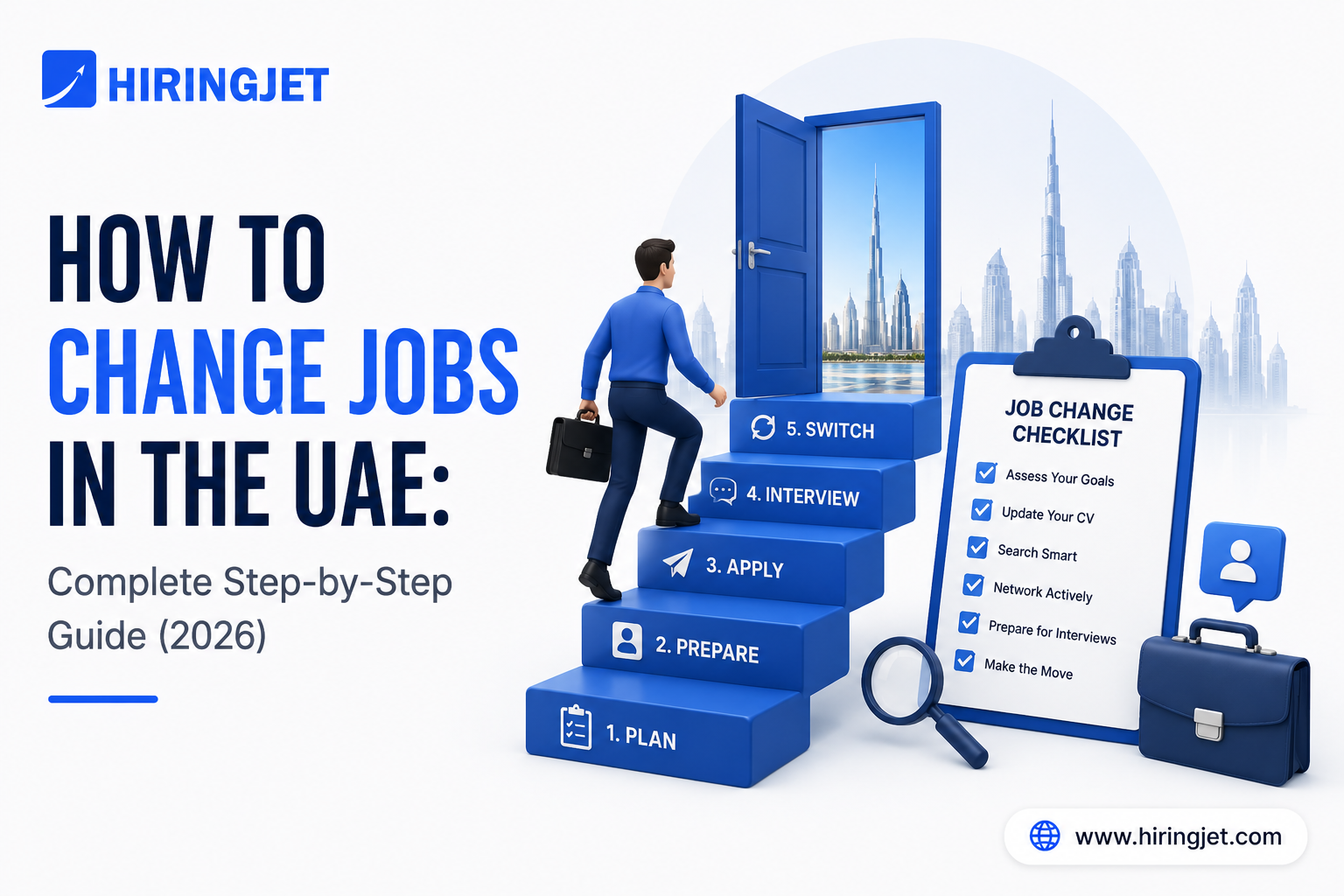
We have guided hundreds of candidates through UAE job changes over 15 years. The ones who navigate it well plan the process deliberately. This guide gives you that plan.
Step 1: Decide If the Timing Is Right
Before updating your CV or contacting recruiters, be honest about your timing. Three questions determine whether the moment is right.
- How long have you been in your current role? Staying less than one year in a role in the UAE raises questions from future employers that require explanation. Less than six months is a significant red flag for most UAE hiring managers. There are genuine exceptions, but enter the market with awareness of how your tenure will be perceived.
- What is your current visa situation? Are you on an employment visa sponsored by your current employer? Is it within its validity period? Has your employer paid your MOHRE registration dues? These details affect how smoothly a visa transfer will proceed.
- Is your financial position secure for the transition? UAE visa transfers take time. There may be a gap between your last salary from your current employer and your first salary from your new one. Budget for this.
Step 2: Update Your CV and LinkedIn Profile
Before making any active moves in the market, ensure your CV and LinkedIn profile are current, accurate, and optimised for the UAE job market.
JetBoost CV on HiringJet diagnoses your CV for ATS compatibility, rewrites it for both machine and human readability, and adds a Verified Badge that signals your application is serious before a hiring manager reads the first line. In a job change, where you are likely to be compared against active job seekers who have been preparing their materials for longer, a professionally upgraded CV is a practical competitive advantage.
Update your LinkedIn headline to reflect what you are looking for, not just your current role. Add the Open to Work setting for recruiters only, which signals your availability to recruiters without displaying the green badge publicly.
Step 3: Search Strategically, Not Reactively
A job change is not the same as an initial job search. You have constraints that a first-time UAE job seeker does not: notice period commitments, employer awareness management, and the need to find a role that is genuinely better than the one you have, not just different.
- Apply to roles where you are a strong match, not roles where you might be considered. The notice period constraint means you have less room to recover from a failed application process than someone who is immediately available.
- Engage two or three specialist recruiters in your sector. Tell them explicitly that you are in a current role with a notice period and give them your timeline. A recruiter who knows your constraints can work to align an employer's timeline to yours rather than losing you to a candidate who is immediately available.
- JetAlert SMS on HiringJet delivers weekly UAE job alerts directly to your mobile for AED 11 per week, ensuring you see relevant new postings before they accumulate application volume. For professionals in a current role who cannot check job boards daily, a mobile alert service is an efficient passive monitoring tool.
Step 4: Managing the Offer and Notice Period
When You Receive an Offer
Do not resign from your current role before you have a signed offer letter from your new employer. A verbal offer is not binding. An email offer is better but can be withdrawn. A signed employment contract or formal offer letter that you have countersigned is the point at which resignation is appropriate.
Review the offer completely before signing. Basic salary, allowances, benefits, probation period, notice period, and non-compete provisions all require review. If the offer is below your expectation, negotiate before signing, not after.
How to Resign Professionally in the UAE
Resign in writing. Draft a brief, professional resignation letter addressed to your direct manager. State your intended last working day based on your contractual notice period. Do not include negative commentary about the organisation, your manager, or your reasons for leaving.
Have the conversation with your manager before submitting the letter if your relationship allows it. Being told verbally before receiving the letter is a professional courtesy that is remembered in a small market where your paths may cross again.
Counter-Offers
When you resign, you may receive a counter-offer from your current employer. As we have noted previously in our content, more than 90% of professionals who accept counter-offers leave the organisation within 12 months. The underlying reasons you were looking in the first place, including compensation, management, culture, or growth, have not changed. A counter-offer addresses the symptom, not the cause. Accept it only if you are genuinely satisfied that the underlying issue has been resolved, not just temporarily addressed.
Step 5: The UAE Visa Transfer Process
Once you have resigned and your new employer has initiated your employment, the visa transfer process begins. Here is how it works in practice.
- Your current employer cancels your existing UAE residence visa and employment permit. You receive a visa cancellation stamp in your passport. From this point, you have a grace period (typically 30 days under standard visa rules, which may vary) to either exit the UAE or have your new visa stamped.
- Your new employer applies for your new employment permit through MOHRE and then applies for your new UAE residence visa. This process typically takes two to four weeks from initiation to visa stamping.
- During the visa transfer period, you do not have a valid UAE residence visa and are technically in the country on a grace period. Avoid travel outside the UAE during this window if possible, as re-entry may be complicated without a valid residence visa.
- Once your new visa is stamped, you are fully legal under your new employer's sponsorship and your grace period is resolved. The process is routine and millions of UAE professionals go through it annually.
Frequently Asked Questions
Can my current employer prevent me from joining a competitor in the UAE?
Depending on your employment contract, you may be subject to a non-compete clause that restricts joining a direct competitor for a defined period, typically up to two years, within a defined geographic area. Whether such a clause is enforceable depends on its specific terms and the circumstances of your departure. If you have a non-compete provision in your contract and you are considering joining a direct competitor, seek legal advice before proceeding.
What happens to my gratuity when I change jobs in the UAE?
Your end of service gratuity is calculated and paid by your current employer upon your departure. It is based on your basic salary and the number of years of service completed. Gratuity is typically paid with your final salary. Your new employer begins accruing gratuity on your behalf from your first day of employment with them. There is no portability of gratuity between UAE employers.
How do I handle a gap between leaving one job and starting another in the UAE?
A gap of two to six weeks between jobs is normal in the UAE and is accepted by most employers as a standard visa transfer timeline. A gap of more than three months may require a brief explanation in the CV or at interview. If you are between roles for an extended period, continue professional development activities such as certifications, freelance projects, or industry engagement that you can reference when the gap is raised. Avoid leaving a gap unexplained on your CV.
Should I tell my current employer I am looking for a new job?
No. Searching for a new role while employed is entirely standard and legal in the UAE, but informing your current employer before you have a confirmed new offer creates unnecessary risk. Your employer may accelerate your departure, remove you from client-facing responsibilities, or create a difficult working environment during your notice period. Search discreetly, use the recruiter-only Open to Work setting on LinkedIn, and inform your employer only once you have a signed offer and are ready to resign.
The HiringJet Team
Built by recruiters and business development professionals who have lived every side of the UAE job market.
Published: 5th Aug, 2026 | Category: Job Seeker Guides | Author: The HiringJet Team